
Why Emotions Get Stored in the Body (And How Yoga Helps in Emotional Healing)

Updated: Mar 28
Understanding the Body’s Emotional Response
At some point in life, we all experience situations where a sudden rush of emotions takes over the body. During such moments, the body releases stress hormones like adrenaline and cortisol. These hormones prepare us to react quickly when we face a challenging or threatening situation.
When the body enters what is commonly known as the fight-or-flight response, a surge of energy is created to help us deal with the situation. Ideally, this energy is meant to move through the body and be released through action.
However, in everyday life, we often suppress our reactions. Instead of running, shouting, or expressing the emotion, we hold it in and continue with our routine. When this happens repeatedly, the body gradually begins to store the tension created by these emotional experiences.
Our nervous system is designed to remember situations that feel stressful or threatening. This survival mechanism helps the body stay alert and prepared for similar experiences in the future.
But where exactly do these emotions get stored in the body?
And how can practices like yoga help release them?
How Emotional Tension Gets Stored in the Body
One important thing that happens during the fight-or-flight response is the contraction of muscles. When the body prepares to perform a physical action such as running away from danger or defending itself, the muscles tighten and become ready for movement.
The brain sends signals to the body to either fight or flee. In earlier times, humans would naturally respond through physical action, which helped release the built-up energy in the body.
In modern life, however, we often do not respond physically to stressful situations. Instead, we suppress our reactions and continue with our daily activities.
When the body prepares for action but does not release that energy, the tension remains in the muscles. Over time, these repeated patterns can become part of our muscle memory.
Because the body never receives a clear signal to fully relax, the muscles stay slightly tense. These tense muscles then send signals back to the brain, indicating stress or discomfort. As a result, the brain continues to interpret the body as being under pressure.
This creates a cycle where the mind and body keep reinforcing each other's stress responses. The cycle often continues until we consciously bring awareness to the body and take steps to release the stored tension.

How Yoga Helps Release Stored Emotional Tension
Yoga offers a gentle and mindful way to interrupt the cycle of tension between the body and the brain.
During periods of chronic stress, many people unconsciously develop shallow breathing patterns. Shallow breathing does not allow the body to absorb enough oxygen to support the natural functioning of every cell.
Through slow, conscious movements and deep sectional breathing, the body gradually begins to receive signals of safety and relaxation. As the breath becomes deeper and more rhythmic, the nervous system starts shifting away from the fight-or-flight response toward a calmer and more balanced state.
With regular practice, yoga also encourages awareness of the body and breath. This awareness helps individuals notice areas of stiffness or tight muscles and consciously allow them to soften.
Over time, this process helps the body move from a constant state of tension toward a state of balance, ease, and relaxation.

Simple Yoga Practices for Emotional Release
Slow, gentle yoga practices can help release stored tension and restore a sense of peace in the body and mind. These simple practices can easily be included in a daily routine to support overall balance.
1. Belly Breathing (Deep Sectional Breathing)
Belly breathing is the best and most effective way to calm the brain and encourage deep relaxation.
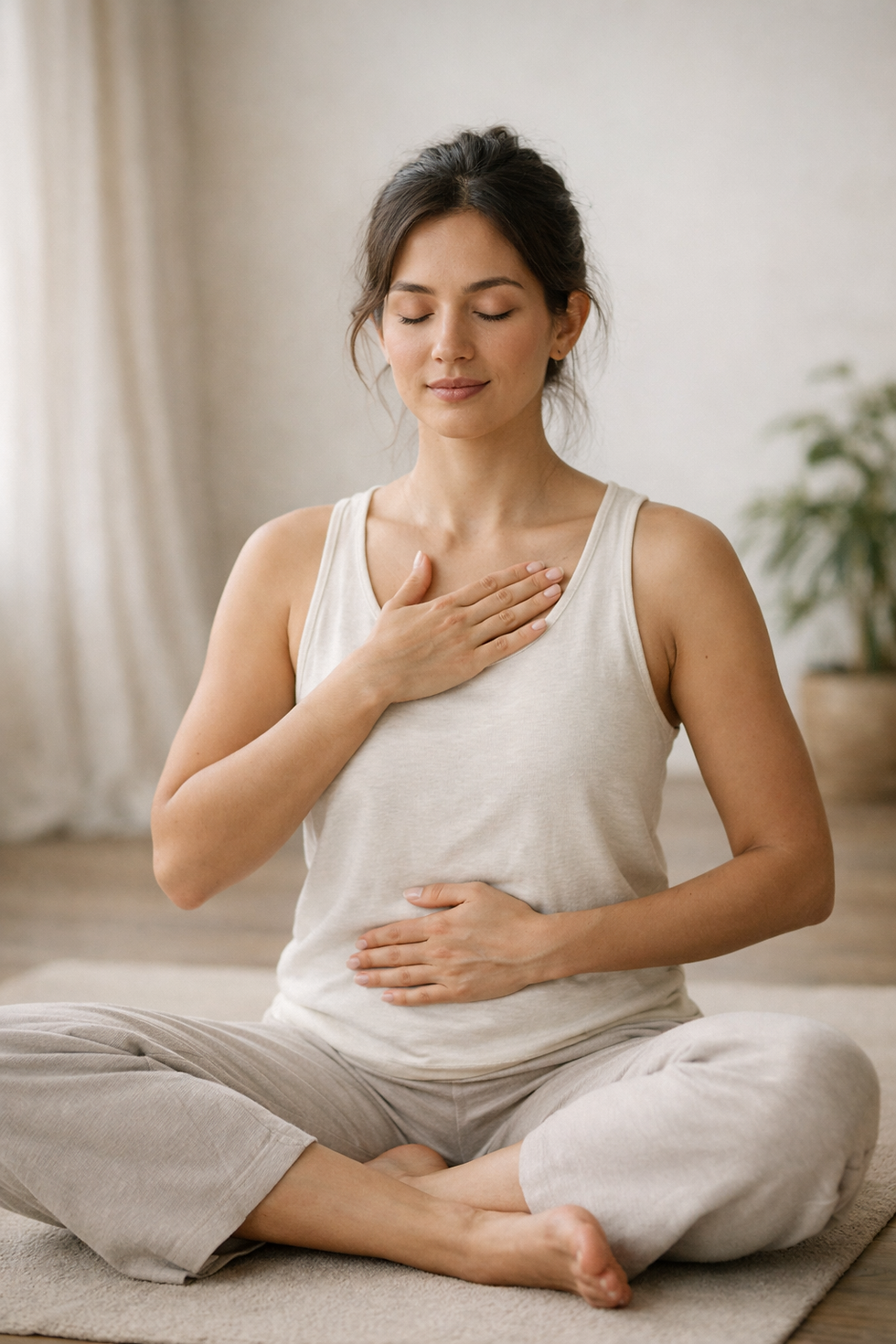
To practice belly breathing, sit comfortably or lie down in a relaxed position. Place one hand on your belly with fingers wide open. Slowly inhale through the nose and allow the belly to expand. The hand on the belly should gently rise while the chest remains relatively relaxed.
Then slowly exhale through the nose, allowing the belly to soften and fall naturally.
This type of breathing allows the lungs to expand fully and increases oxygen absorption in the body. At the same time, it activates the body’s relaxation response, helping reduce stress and stress hormones.

2. Cat & Cow Movement
The Cat & Cow flow helps release tension in the spine, calming the nervous system as there is a sync happening between body and breath.
Come into tabletop position, with your wrist joints under your shoulders and your knee joints under your hips. As you inhale, gently raise your chin and tailbone upward, allowing the belly to move towards the floor. This creates the Cow pose.
As you exhale, hunch your back, drawing the chin toward the chest; this creates the Cat pose.
Moving slowly between these two positions helps release stiffness in the spine, improves breathing capacity, and encourages the body to let go of stored stress.

3. Gentle Forward Fold
Forward folds are calming postures that help quiet the mind and release tension stored in the back and shoulders.
Stand with your feet hip-width apart. Slowly bend forward from the hips and allow the upper body to relax toward the legs. Let the head and neck soften while the arms hang comfortably. Stay in the posture for a few slow breaths.
This posture encourages the attitude of surrendering, which tends to relax tension in the torso area.

4. Heart Opening Stretch
Heart-opening stretches help release tightness in the chest and shoulder areas where many people tend to hold emotional stress.
Stand or sit comfortably and gently interlock your fingers behind your back. As you inhale, straighten the arms slightly and lift the chest upward, allowing the shoulders to roll back. Keep the neck relaxed and breathe slowly while holding the stretch. This simple movement opens the chest area, encourages deeper breathing, and creates a feeling of emotional openness.

Conclusion
No matter what situations arise in day-to-day life, it is all about practising and staying consistent with yoga. Yoga teaches us how to remain balanced through conscious sectional breathing. When practised regularly, it trains the mind to stay calm and serene even during difficult moments.
If you like to explore these practices, you can experience guided Yoga and Breathwork sessions on the Aanamra Yogalaya YouTube channel, where gentle practices are shared to support emotional balance and inner well-being.
Comments